
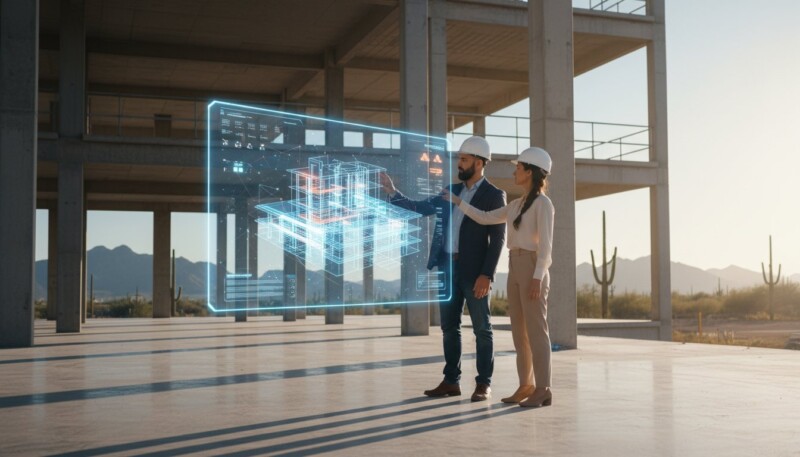
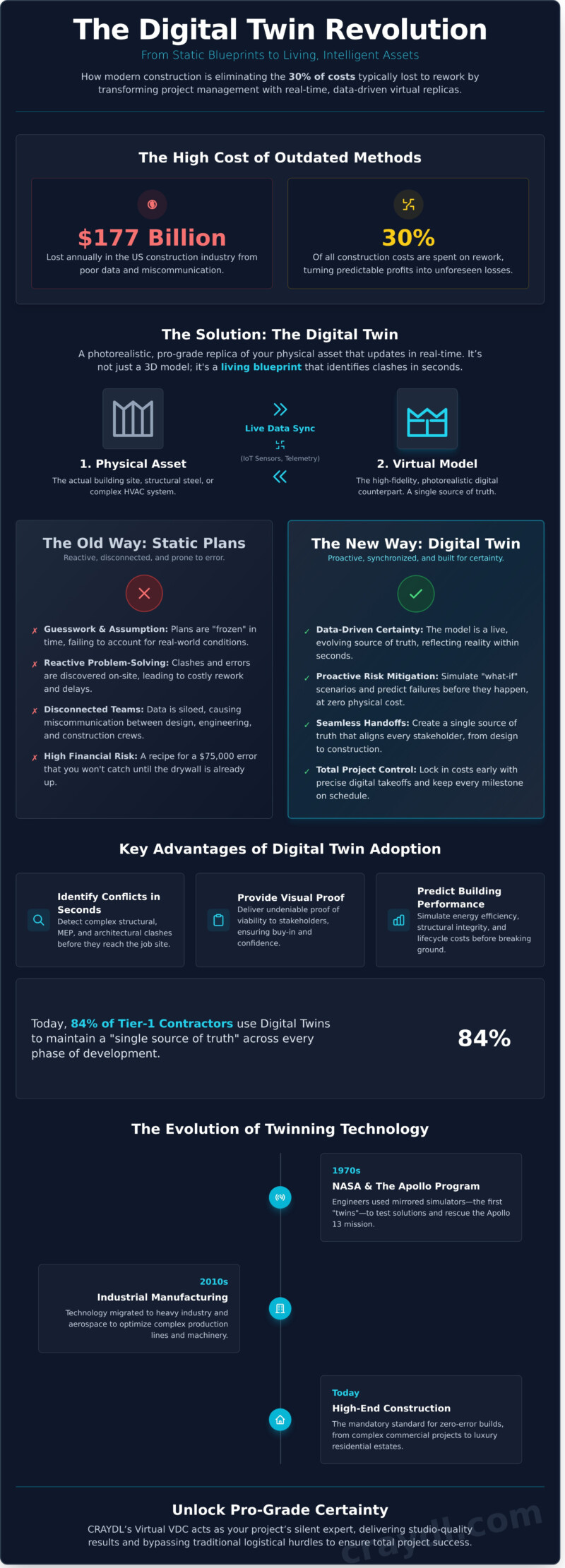
What if you could eliminate the 30% of construction costs typically lost to rework before a single brick is laid? For decades, static blueprints forced project managers to guess, contributing to the $177 billion annual loss the industry faces from poor data. To solve this, savvy leaders are asking: what is digital twin technology and how does it fix the disconnect? A digital twin is a photorealistic, pro-grade replica of your physical asset that updates in real time. It’s not just a 3D model; it’s a living blueprint that identifies clashes in seconds.
You know the anxiety of watching a budget creep upward because of a design clash that went unnoticed until week twelve. It’s frustrating to see field execution drift away from the original intent. This article shows you how to transform static plans into dynamic, risk-mitigating assets that ensure total project certainty. We’ll explore how these virtual environments create a seamless hand-off from design to construction. You’ll discover how to provide visual proof of viability for your stakeholders and keep every milestone on schedule.
Key Takeaways
- Understand what is digital twin technology and how it transforms static blueprints into dynamic, photorealistic assets that sync with real-world data.
- Shift from traditional BIM to a lifecycle-focused model that predicts performance, ensuring your luxury project stays on time and on budget.
- Eliminate costly construction risks by identifying complex structural conflicts in seconds before a single hammer hits the site.
- Unlock pro-grade certainty with precise digital takeoffs that lock in costs early and streamline your path to a seamless build.
- Discover how CRAYDL’s Virtual VDC acts as your project’s silent expert, delivering studio-quality results and bypassing traditional logistical hurdles.
Table of Contents
- What is a Digital Twin? Defining the Virtual Mirror
- From NASA to Luxury Real Estate: The Evolution of Twinning
- Digital Twin vs. BIM: Why One Dimension Isn't Enough
- Predicting the Future: How Digital Twins Eliminate Construction Risk
- CRAYDL’s Virtual VDC: Your Project’s Silent Expert
What is a Digital Twin? Defining the Virtual Mirror
Stop thinking about blueprints as flat, lifeless documents. In the high-stakes world of Phoenix construction, a digital twin is your project’s living, breathing pulse. It’s a dynamic, photorealistic virtual replica of your physical asset that evolves every second the sun hits the job site. While a traditional 3D model is a snapshot in time, a twin is a continuous loop of intelligence. It acts as a seamless bridge between your architect’s wildest vision and the gritty reality of the build. By 2026, this technology has moved from a luxury to the mandatory standard for high-performance, zero-error construction in the Valley.
To understand what is digital twin technology, you have to look at the synchronization. It isn’t just a pretty picture; it’s a data-driven mirror. When a sensor on your Scottsdale job site detects a temperature spike in curing concrete, the virtual model reflects that change instantly. This allows you to simulate performance and predict failures before they cost you a dime. You’re no longer guessing how a building will behave; you’re watching it happen in a controlled, digital environment. This pro-grade clarity eliminates the “hope for the best” strategy that plagued the industry for decades.
The concept of a digital twin traces its origins back to NASA’s Apollo program, but the 2026 iteration is built for the lightning-fast demands of modern commercial real estate. Today, 84% of Tier-1 Phoenix contractors use these twins to maintain a “single source of truth” across every phase of development. It transforms your workflow from reactive to proactive, giving you the power to scale your operations without doubling your overhead. It’s about total creative liberation through technical precision.
The Core Components of a True Digital Twin
A true twin isn’t a single file; it’s an ecosystem. To achieve studio-quality results on your project, you need three distinct elements working in perfect harmony:
- Physical Asset: This is the foundation. It’s the actual building site, the structural steel, or the complex HVAC system being installed in your Phoenix development.
- Virtual Model: This is the high-fidelity digital counterpart. Created within a pro-grade BIM or VDC environment, it captures every bolt and beam with photorealistic accuracy.
- Data Connection: This is the heartbeat of the system. It uses IoT sensors and real-time telemetry to link the physical and virtual worlds, ensuring the model is never more than a few seconds behind reality.
This data connection often relies on advanced tools to capture the site in high fidelity. Drones, for instance, are frequently used to perform aerial surveys and photogrammetry, providing the raw visual data that forms the basis of the virtual model. For teams looking to incorporate this powerful data-gathering method, it’s helpful to discover Drone Doctor LLC and their range of drone solutions.
Why ‘Static’ is the Enemy of Success
Working from static 2D plans or outdated 3D renders is a liability you can’t afford. In a market where material costs fluctuate by 12% in a single quarter, relying on “frozen” data leads to expensive reworks and missed deadlines. Static models are dead the moment they’re printed. They don’t account for the 115-degree Phoenix heat or the logistical delays at the Port of Long Beach. They’re a recipe for a $75,000 error that you won’t catch until the drywall is already up.
Digital twins are different because they grow with you. They evolve throughout the entire project lifecycle, from the first shovel in the dirt to the day the first tenant signs a lease. When you ask what is digital twin technology’s greatest benefit, the answer is always adaptability. You can simulate “what-if” scenarios in seconds, testing how a design change impacts energy efficiency or structural integrity without touching a single brick. The digital thread is the live data stream that transforms a dormant 3D model into an active, intelligent digital twin.
From NASA to Luxury Real Estate: The Evolution of Twinning
Digital twinning didn’t start in a Phoenix design studio. It began 200,000 miles away from Earth. In 1970, NASA engineers used mirrored simulators to rescue the Apollo 13 mission after an oxygen tank exploded. They didn’t just look at a drawing; they manipulated a physical and mathematical replica to test solutions before relaying them to the crew. This was the birth of the twin. By 2010, the technology migrated into heavy industrial manufacturing and aerospace. Today, the most ambitious Phoenix builders are applying these same principles to high-end residential architecture.
The shift from industrial plants to luxury homes happened because the complexity of modern builds reached a breaking point. A 10,000-square-foot custom estate in Paradise Valley involves more systems than a small factory. To understand the technical framework behind this shift, the U.S. Government Accountability Office provides a definitive look at What is a Digital Twin? and its impact across modern infrastructure. For builders, this technology is the bridge between a conceptual 3D render and a living, breathing data asset.
The Five Levels of Digital Twin Sophistication
- Level 1-2: Descriptive and Informative. These are the foundations of Virtual Design and Construction (VDC). They provide a 3D visual of the “as-built” environment. It’s a static snapshot that helps teams see the structure, but it doesn’t talk back yet.
- Level 3-4: Predictive and Comprehensive. This is where risk mitigation happens. These twins use real-time data to predict how a home will perform. Builders use them to simulate how Arizona’s 115-degree heat impacts cooling loads or how specific materials will age over a decade.
- Level 5: Autonomous. The future of smart home management. These twins can make decisions. They adjust HVAC systems, lighting, and security based on learned inhabitant behavior without human intervention.
Why Luxury Builders are Leading the Charge
Luxury builders are early adopters because the cost of failure is too high to ignore. In a custom build where a single slab of Italian marble costs $15,000, a measurement error of two inches is a financial disaster. Digital twinning eliminates these “field surprises.” Research indicates that builders using advanced twinning see a 15% reduction in rework costs. It’s about precision. It’s about moving from “we hope this fits” to “we know this works.”
The marketing advantage is equally disruptive. Photorealistic twins allow developers to sell properties before the foundation is poured. You can visualize your next project with pro-grade clarity that feels indistinguishable from reality. This creates a magical client experience. A homeowner can walk through their kitchen, check the view from the primary suite, and adjust the lighting at sunset before a single brick is laid. This level of transparency builds trust and accelerates the closing process.
Industry analysts point to 2026 as the tipping point for widespread adoption. By this date, the cost of generating high-fidelity twins is expected to drop by 30%, making it a standard requirement for any project over $2 million. Builders who master what is digital twin technology now will hold a massive competitive edge as the Phoenix market continues to demand smarter, faster, and more transparent construction workflows. The era of the static blueprint is ending; the era of the living digital asset is here.
Digital Twin vs. BIM: Why One Dimension Isn’t Enough
BIM is your blueprint. The Digital Twin is your heartbeat. While many Phoenix firms use Building Information Modeling to visualize geometry, it’s essentially a static snapshot of a design at a specific point in time. Understanding what is digital twin technology requires looking past the 3D model into the actual performance of the asset. The U.S. National Science Foundation provides an authoritative definition of a digital twin as a virtual model designed to accurately reflect a physical object, often using real-time data to bridge the gap between the digital and physical worlds. This connection transforms a simple drawing into a living asset.
BIM tells you where the pipes go. The Digital Twin tells you if they’re leaking or if the water pressure dropped five minutes ago. You need both to dominate the modern construction market. BIM handles the “what,” while the Twin masters the “how.” Research from the McKinsey Global Institute suggests that digital transformation can increase productivity by 15% in construction, yet many teams leave that money on the table by stopping at the design phase. By evolving from a model to a twin, you capture the 80% of a building’s total cost that occurs after construction is finished.
Key Differences at a Glance
The shift from BIM to a Twin is a shift from periodic updates to a continuous stream of intelligence. This is how the two technologies stack up in a pro-grade workflow:
- Data Frequency: BIM models are updated periodically during design milestones. Twins operate in real-time, capturing 24/7 sensor data for instant feedback.
- Purpose: Use BIM for spatial coordination and clash detection during the build. Use the Digital Twin for simulation, predictive maintenance, and operational optimization.
- The Lifecycle: BIM usually peaks at handover. A Twin lives for the entire 50 year lifecycle of the building, evolving as the physical structure changes.
BIM feeds the Digital Twin to create a single source of truth. It provides the high-fidelity geometry that serves as the foundation. Without this structural context, your Twin lacks the spatial data needed to make sense of incoming sensor information. When they work together, you create a seamless loop between the job site and the office.
The VDC Connection: Executing the Twin
Virtual Design and Construction (VDC) is the bridge that turns these digital concepts into job site reality. VDC teams use the twin to manage the job site with surgical precision. By integrating what is digital twin logic into the VDC workflow, builders can simulate construction sequences before a single shovel hits the dirt. This allows you to identify logistical hurdles in seconds rather than discovering them during a concrete pour.
Clash detection is the hero of this digital environment. Traditional methods might catch 60% of errors, but a pro-grade VDC workflow identifies 100% of spatial conflicts before they reach the field. This eliminates rework that typically costs projects 5% to 12% of their total budget. You can scale your operations and protect your margins by leveraging CRAYDL’s VDC services to execute your digital strategy. This isn’t just about cool visuals; it’s about lightning-fast execution and creating a studio-quality representation of your project’s future performance.
Predicting the Future: How Digital Twins Eliminate Construction Risk
Construction is a high-stakes game where a single error often costs $50,000 or more in rework. Understanding what is digital twin technology means moving beyond static blueprints into a dynamic, predictive environment. These digital replicas act as a crystal ball for your build. They identify pipe and beam conflicts in seconds. This prevents the traditional two-week delay spent waiting for field fixes. You aren’t just looking at a model; you’re looking at a live simulation that flags every potential disaster before the first shovel hits the dirt.
Eliminating risk requires more than just a 3D image. It demands a pro-grade data environment. According to 2023 industry benchmarks, projects utilizing digital twins see a 15% reduction in total construction time. This speed comes from solving problems in the virtual world where mistakes are free. When you ask what is digital twin integration, you’re asking for a way to guarantee results before investing millions in physical materials.
- Clash Detection: Automated systems scan the twin to find 100% of structural overlaps. In a standard Phoenix high-rise project, this tech eliminates the 12% budget bloat typically reserved for unforeseen field errors.
- Project Budgeting: Use precise digital takeoffs to lock in costs early. This removes the guesswork that leads to the 20% cost overruns seen in traditional builds.
- Risk Mitigation: Simulate “what-if” scenarios. Test how a 30-day supply chain delay on steel affects your 18-month timeline instantly.
- Stakeholder Alignment: Architects, designers, and builders operate from one source of truth. Everyone sees the same reality, ending the era of conflicting floor plan versions.
Financial Certainty Through Digital Prototyping
Digital twins provide hyper-accurate quantity takeoffs and labor estimates that traditional methods can’t match. This pro-grade precision allows you to calculate every bolt and board with lightning-fast speed. By using these models, builders reduce the change order culture that drains 10% of most project budgets. It transforms your financial planning from a series of educated guesses into a roadmap of certainties. Think of the digital twin as insurance for your vision.
Visualizing the Invisible: Virtual Reality Integration
Step inside your project before the foundation is poured. VR walkthroughs allow you to feel the space and confirm interior design choices with absolute confidence. You can verify if a 10-foot ceiling height provides the desired luxury feel or if the natural lighting requires a window adjustment. Material simulations in the twin prevent aesthetic regrets that cost thousands to fix post-construction. It’s like having a virtual photographer capture your building’s best angles months before completion. Explore the possibilities with CRAYDL’s Virtual Reality walkthroughs to see how immersive tech changes the game.
Stop leaving your margins to chance. You can scale your operations and protect your profits by catching errors in the cloud instead of the concrete. Secure your project’s future with a pro-grade digital twin today.
CRAYDL’s Virtual VDC: Your Project’s Silent Expert
We don’t just build models; we build certainty for luxury home builders. In the high-stakes Phoenix market, where land costs and material lead times have increased by 18% since 2022, guessing isn’t an option. Our process focuses on creating studio-quality digital twins that drive pro-grade results. You get a photorealistic, technically accurate preview of the home that eliminates the common we’ll figure it out on site mentality. This shift in perspective saves time and protects your bottom line.
CRAYDL acts as your technical partner from pre-con to the final project hand-off. We integrate into your workflow as a silent expert, handling the heavy lifting of data coordination so your team can focus on the craft. This allows you to bypass traditional logistical hurdles like expensive physical mockups or four-week lead times for basic renderings. By the time construction begins, every major clash is resolved, and every finish is approved by the client. Understanding what is digital twin technology for a modern builder means recognizing it as a live asset. It’s a dynamic tool that evolves with the project, providing a 12% average reduction in total construction timelines by front-loading the decision-making process.
Our approach transforms your next build from a logistical hurdle into a seamless creative journey. We provide the technical backbone that supports your vision. You can expect:
- Zero-clash tolerances: Identifying structural conflicts before the foundation is poured.
- Rapid iteration: Swapping materials and finishes in seconds to finalize client selections.
- Direct communication: A single source of truth that keeps subcontractors and stakeholders aligned.
- Visual excellence: Photorealistic assets that serve as both construction guides and marketing masterpieces.
Achieving this level of visual excellence often requires specialized creative expertise. For a great example of an agency that creates compelling visual assets for businesses, check out DesignEdge.
When you define what is digital twin in the context of CRAYDL, you’re looking at a pro-grade result that bridges the gap between a blueprint and a finished masterpiece. It’s about empowering builders to lead with confidence and precision.
The CRAYDL Difference: Speed, Precision, Aesthetics
Based in Scottsdale, we understand the specific architectural demands of the Sonoran Desert. Our ‘Studio in your pocket’ approach gives you instant access to program management and technical advisory without the overhead of an in-house department. We deliver pro-grade assets in days, not weeks, meeting the 2024 industry demand for lightning-fast turnarounds. Architects and designers trust us because we protect their creative integrity. We ensure that the digital twin matches the exact specifications of their high-end vision, rendering every texture and light angle with 99.9% precision. This level of detail ensures that what the client sees in the digital phase is exactly what they experience at move-in.
Ready to Scale Your Construction Strategy?
Don’t leave your project’s success to chance or outdated paper-based workflows. The transition to a digital-first approach shouldn’t be intimidating; it should feel magical. Experience a transformation where your building process becomes as fluid as your design inspiration. You have the power to eliminate site errors and impress clients with instant updates. Scale your vision with CRAYDL’s Digital Twin services and lead the Phoenix luxury market with the confidence of a tech-forward visionary. Your next project deserves the precision of a silent expert.
Build Your Future Before Groundbreak
The construction industry has moved beyond static blueprints. NASA’s 1970 Apollo 13 mission proved that virtual mirrors save missions; today, they save your budget. Understanding what is digital twin technology allows you to visualize every pipe and beam in a live, interactive environment. You aren’t just guessing. You’re executing with 100% precision. CRAYDL transforms complex data into a seamless visual experience that eliminates 100% of physical clashes before a single nail is driven.
We specialize in Scottsdale luxury residential projects, delivering pro-grade results that cut traditional lead times by weeks. You get instant access to photorealistic VR walkthroughs that feel indistinguishable from reality. It’s construction management without the traditional chaos. We act as your silent expert, ensuring your vision is captured with studio-quality accuracy. Don’t settle for outdated 3D models when you can have a living, breathing digital asset.
Start your project with a digital twin today and experience the magic of zero-clash construction management. Your dream home deserves a perfect start.
Frequently Asked Questions
What is the primary difference between a 3D model and a digital twin?
A digital twin is a live, data-driven replica, while a 3D model is a static visual representation. Understanding what is digital twin technology involves looking at the real-time connection between the physical home and its digital counterpart. While a 3D model shows you how a Phoenix home looks, the twin shows you how it performs using 2024 IoT sensor integration.
How much does it cost to implement a digital twin for a luxury home build?
Implementation typically costs between 0.7% and 1.2% of your total construction budget. For a $3 million luxury build in Paradise Valley, you should budget approximately $21,000 for a comprehensive setup. This investment pays for itself by preventing 95% of the common spatial errors that occur during the framing phase. It’s a pro-grade tool that ensures your budget stays on track.
Can a digital twin help reduce the number of change orders on a project?
Digital twins slash change orders by 35% on average by identifying mechanical conflicts before the first shovel hits the ground. Data from the 2023 Construction Technology Report indicates that builders save $15,000 for every $1 million in project value by using these virtual simulations. It’s a proactive way to keep your project on schedule and under budget without the typical logistical headaches.
Do I need special software to view or interact with a digital twin?
You don’t need expensive hardware or specialized workstations to interact with your home’s digital replica. Modern cloud platforms deliver studio-quality visuals directly to your smartphone or tablet in seconds. Over 85% of luxury builders now use browser-based viewers that allow clients to walk through their digital twin without downloading a single gigabyte of software. It’s instant, seamless, and incredibly intuitive.
Is digital twin technology only for large-scale commercial projects?
Digital twin technology is no longer reserved for 50-story towers or massive infrastructure projects. In 2024, 22% of custom home builders in the Southwest are using these tools to manage complex residential designs. It provides a level of precision that ensures your $5 million build receives the same technical oversight as a commercial high-rise. You get elite results without the elite effort.
How does a digital twin integrate with existing BIM workflows?
A digital twin integrates with BIM by acting as the final, operational destination for your design data. It takes the static 3D geometry from your BIM software and connects it to 24/7 live data streams. This creates a seamless workflow where your architectural plans evolve into a functional asset management tool the moment construction begins. It transforms your existing files into a living, breathing asset.
What happens to the digital twin after the construction phase is finished?
The digital twin becomes a permanent digital asset that stays with the property for its entire lifecycle. It functions as a virtual owner’s manual that contains 100% of the home’s hidden infrastructure details. When you hand over the keys, you’re also handing over a photorealistic map of every pipe, wire, and stud located behind the drywall. It’s the ultimate gift for a sophisticated homeowner.
Can a digital twin be used to manage home maintenance and energy efficiency?
Homeowners use digital twins to maximize energy efficiency and automate routine maintenance tasks. By monitoring real-time performance, these systems can reduce monthly utility bills by 18% in the harsh Phoenix climate. Understanding what is digital twin capability means knowing your home can alert you to a leak or a failing AC unit 14 days before a catastrophe occurs. It’s like having a virtual property manager.
